Jargon madness: A plain language exercise

Federal plain writing practitioners may find it hard to engage with their colleagues, and formal plain language training programs can sometimes be a difficult sell to leadership.
One agency developed an entertaining exercise to promote plain language practices by focusing on a common enemy of the plain writer: jargon.
Laura Rabuck, a research health science specialist and lead content strategist at the Veterans Health Administration, created a "Jargon Madness" tournament-style bracket. It’s modeled after a similar annual college basketball-themed bracket. In this version, jargon battles for the title of “Most confusing” based on votes.
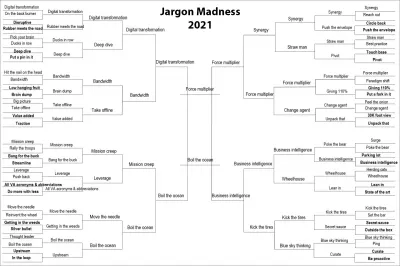
from Laura Rabuck’s 2022 Federal Plain Language Summit presentation. You can also watch the 28-minute, 13-second video on YouTube.
Jargon Madness is a plain language conversation starter that cuts across the organizational chart. It offers engagement and education. Unlike a meeting or a scheduled training, it’s a fun, asynchronous activity that staff can participate in when they have time.
If you want to host a Jargon Madness event at your agency, consider the following:
- Confirm leadership buy-in and if there’s an audience.
- Confirm your champions/sponsors and partners.
- Confirm staffing support.
- Confirm language with your general counsel.
- Decide bracket size and corresponding timeline.
- Decide (and test) where you’ll host it and how voting will work.
- Decide how to identify jargon.
- Develop a marketing plan, however small (but mighty!).
- Research and draft ideas for education.
- Decide on post-event survey.
Start now! Next March will arrive quickly.
The Plain Language Action and Information Network (PLAIN) is a group of federal employees from different agencies and specialties who support the use of clear communication in government writing. Join the Community of Practice.